Understanding Rubber, TPO, and PVC Membranes
Each of these three membranes solves the flat-roof problem differently, and choosing among them depends on your building, climate exposure, and budget. Rubber roofing, known technically as EPDM, is a synthetic rubber membrane prized for its longevity and flexibility. It handles temperature swings and UV exposure well, and it has decades of proven performance on commercial rooftops.
TPO and PVC are thermoplastic membranes, meaning their seams are heat-welded rather than glued or taped. TPO has surged in popularity because its white, reflective surface bounces solar heat away, lowering cooling costs during warm months. PVC brings exceptional chemical resistance, which makes it a favorite for restaurants and industrial buildings where grease, oils, and exhaust can degrade lesser materials over time.
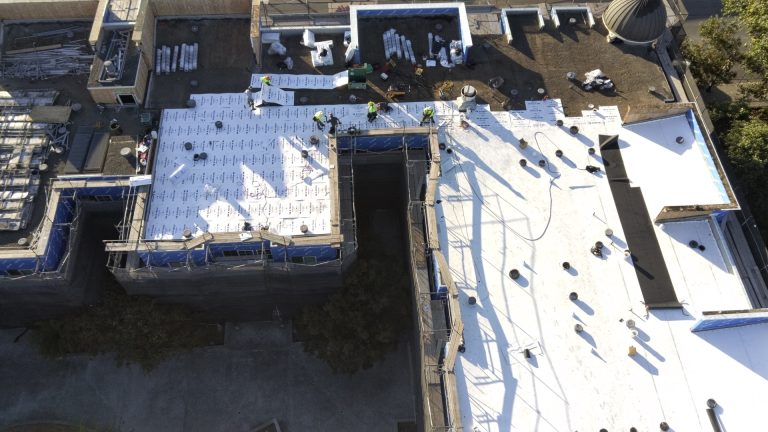
How We Install Single-Ply Roofing
A durable membrane roof is only as good as the preparation and workmanship behind it. Our crews begin every project by examining the existing deck and insulation, because a compromised substrate will undermine even the best membrane. We identify soft spots, moisture intrusion, and inadequate slope before anything new goes down.
From there, the installation follows a deliberate sequence. Our approach generally moves through these stages:
- Inspection and measurement: We assess the deck, drainage, and penetrations, then take precise measurements to minimize seams and waste.
- Substrate and insulation prep: Damaged decking is repaired and cover boards or insulation are installed to meet the target R-value and provide a smooth base.
- Membrane placement: The rubber, TPO, or PVC sheet is rolled out and secured using the specified method – fully adhered, mechanically fastened, or ballasted.
- Seam welding or bonding: Thermoplastic seams are heat-welded into a monolithic bond, while EPDM seams are sealed with tape and adhesive systems.
- Flashing and detailing: Curbs, drains, vents, and edges receive careful flashing, since these transitions are where most leaks begin.
- Final inspection and cleanup: We probe every seam, confirm proper drainage, and leave your property clean – we respect your property and are mindful to clean up after ourselves.
Technical Specifications Worth Knowing
Membrane thickness is one of the most important specifications, typically ranging from 45 to 90 mils. Thicker membranes resist punctures and foot traffic better, which matters on roofs that house HVAC units requiring regular service. We help you weigh thickness against budget so you invest where it counts.
Attachment method also drives long-term performance. Fully adhered systems create a smooth, uplift-resistant surface ideal for high-wind exposure, while mechanically fastened systems install efficiently over large commercial spans. Reflective TPO and PVC membranes contribute to energy efficiency, aligning with our commitment to environmentally friendly best practices and materials. As an Energy Solar Certified and Timberline Solar Roofing Contractor, we can also discuss how a low-slope membrane integrates with future solar plans.
Where These Roofs Make Sense
The versatility of single-ply membranes shows up across many building types. Warehouses and retail centers rely on TPO for its reflectivity and clean appearance. Restaurants and manufacturing facilities lean on PVC for its resistance to grease and chemicals. Homeowners with modern flat-roof designs, porch additions, or garage extensions frequently choose EPDM for its dependable, low-maintenance performance.
We install and service these systems for both residential and commercial clients throughout Petaluma, CA and surrounding areas, drawing on more than 80 years in business. That experience means we’ve seen how membranes age, where they fail, and how to build them to last. Whether you’re replacing a failing built-up roof or specifying a membrane for new construction, we tailor the system to your building rather than forcing a one-size-fits-all approach.
Why Property Owners Choose Henris Roofing
Our reputation is built on being professional, reliable, efficient, and established, and we back that with credentials that matter. As a GAF Master Elite and ShingleMaster Pro contractor, Henris Roofing meets standards that only a small percentage of roofers achieve. We support our local community and stand behind every installation.
We also know that flat-roof problems rarely wait for business hours, which is why we offer 24/7 emergency service when a leak threatens your interior or inventory. And because a new roof is a significant decision, we provide free estimates with no conditions, giving you the information you need without pressure.