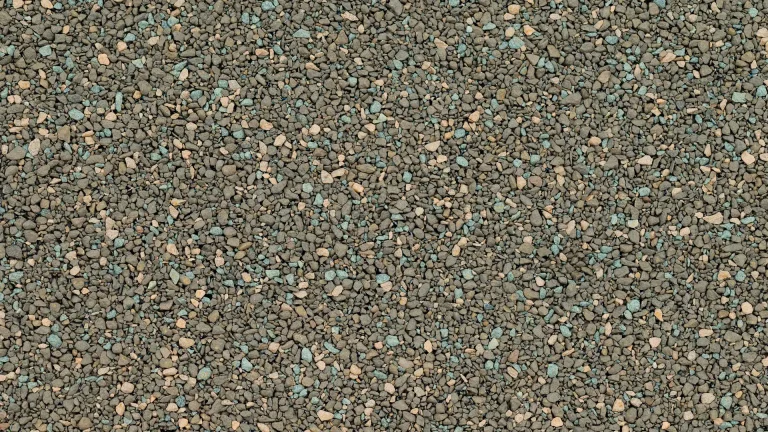
What Tar and Gravel Roofing Actually Is
Built-up roofing is constructed in layers. Alternating sheets of roofing felt, or ply, are bonded together with hot bitumen, which is the tar component. The result is a thick, seamless membrane that spreads across the entire surface rather than relying on individual pieces that can lift or separate. On top of that membrane sits a layer of gravel or crushed stone, embedded into a final flood coat of bitumen.
That gravel is not decorative. It shields the underlying tar from ultraviolet rays, protects against foot traffic and falling debris, and adds fire resistance. The stone also holds heat away from the membrane during summer, reducing thermal stress. When you look at a properly finished tar and gravel roof, you are seeing several distinct materials working together as a single waterproof unit.
How We Build a Tar and Gravel Roof
Every installation begins with preparation. We inspect the deck, remove any failed material, and confirm the surface is clean, dry, and structurally sound. Skipping this step is the fastest way to trap moisture, so we do not rush it. Once the deck is ready, the layering begins.
Our typical process follows a clear sequence:
- Base sheet installation: a foundational ply is fastened or adhered directly to the deck to create a stable starting layer.
- Alternating plies and bitumen: we apply successive layers of roofing felt, mopping hot bitumen between each one to bond them tightly.
- Flood coat and aggregate: a heavy final coat of bitumen receives the gravel, locking the stone in place and sealing the surface.
The number of plies depends on the building, the slope, and the expected wear. A three-ply and four-ply assembly are both common, and heavier commercial roofs may call for more. We match the specification to the structure rather than applying a one-size approach.
Where These Roofs Perform Best
Tar and gravel systems shine on flat and low-slope surfaces where other materials struggle. We install them on commercial storefronts, warehouses, apartment buildings, and municipal structures throughout Petaluma, CA and surrounding areas. They also work well on residential additions, garages, and mid-century homes with flat roof sections.
Property owners choose built-up roofing for several practical reasons:
- Longevity: a well-maintained tar and gravel roof can serve reliably for decades.
- Waterproofing: the multi-ply membrane leaves few points where water can enter.
- Low maintenance: the gravel surface tolerates weather and foot traffic with minimal fuss.
These qualities make BUR a strong fit for buildings that need rooftop equipment access, since the durable surface handles service technicians walking across it far better than a bare membrane would.
Technical Details Worth Knowing
The bitumen used in these systems is heated to a controlled temperature during application, which is why experience matters so much. Too cool and it will not bond, too hot and it degrades. Our crews monitor this carefully. Insulation boards can be integrated beneath the membrane to improve energy efficiency, and reflective coatings can be added on request to reduce cooling loads during hot months.
Drainage design is equally important. Even a flat roof needs a slight pitch toward drains or scuppers to prevent standing water. During installation we verify that water moves where it should, because ponding is the leading cause of premature failure on any low-slope roof.
Why Work With Henris Roofing
We have been in business for over 80 years, and that longevity reflects consistent, honest work. As a GAF Master Elite and ShingleMaster Pro contractor, we hold certifications that only a small percentage of roofers earn. We are also Energy Solar Certified and a Timberline Solar Roofing Contractor, so if your project calls for pairing a durable flat roof with modern energy solutions, we can guide that conversation.
We provide free estimates with no conditions, offer 24/7 emergency service, and respect your property by cleaning up thoroughly after every job. We support our local community, favor environmentally friendly materials and best practices, and serve both residential and commercial clients across Petaluma, Penngrove, Novato, Rohnert Park, Cotati, Santa Rosa, & Sonoma, CA. When your flat roof needs a system built to last, Henris Roofing is ready to help.